
Central Alberta summers bring hail, sometimes with little warning, and a storm cell that hits Sylvan Lake or Lacombe one afternoon can just as easily track through Red Deer the next. Once the storm passes, it’s worth a proper look over the vehicle before assuming the damage is just cosmetic.
Start with the windshield
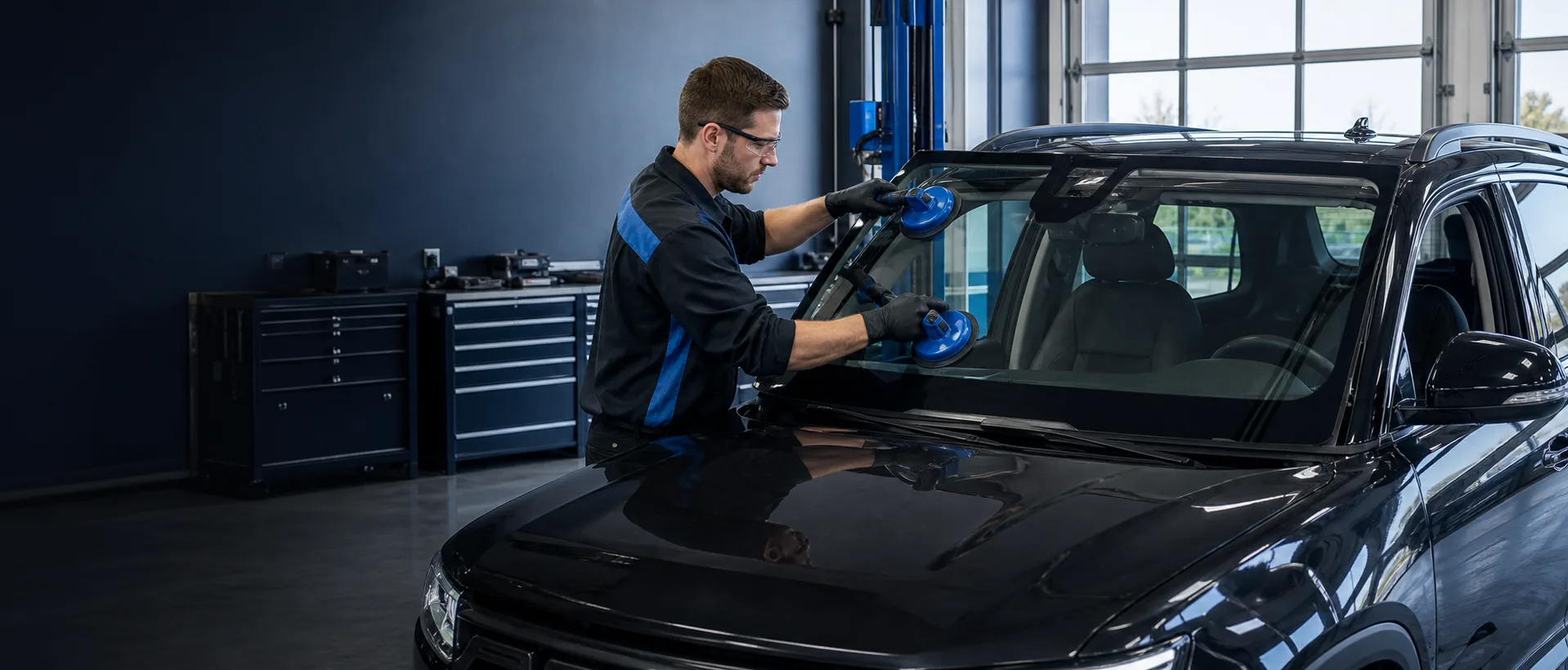
Hail can chip, crack, or leave a pattern of small pits across the windshield, and glass damage isn’t always as obvious as a dent in sheet metal. A compromised windshield affects visibility, and on vehicles with a windshield-mounted camera for driver-assistance features, cracked glass usually means a windshield replacement rather than a simple chip repair.
Check the usual hail-damage spots
The flattest, most exposed panels take the worst of it. Work around the vehicle in this order:
- Roof and hood, the most common spots for dents
- Trunk lid
- Panel edges and mirrors, which are easy to overlook
- Windshield and rear glass for chips, cracks, or pitting
Small dents don’t always mean the vehicle is unsafe to drive, but they’re worth documenting while they’re fresh.
After the storm
Windshield and hail damage assessment
We'll walk the vehicle for dents, glass damage, and anything you might have missed, then call +1 (825) 221-3120.
Paintless dent repair vs. bodywork
Shallow dents where the paint hasn’t cracked can often be fixed with paintless dent repair, which pushes the metal back into shape without repainting. Deeper dents or ones with cracked or chipped paint usually need traditional bodywork instead.
Windshield replacement and camera calibration
If the windshield needs replacing, and your vehicle uses a windshield-mounted camera for features like lane support or forward-collision warning, that camera needs recalibration afterward. The new glass sits in a very slightly different position, and the camera needs to be told exactly where the road is again before those systems can be trusted.
Insurance and next steps
Most hail damage falls under comprehensive coverage, but deductibles and specifics vary by policy. Photograph the damage from a few angles before anything gets touched, and check with your insurer before booking repairs so you know what’s covered. For a general rundown of how hail claims work, see the Insurance Bureau of Canada’s hail and insurance guidance.
Getting it checked in Red Deer
Bring the vehicle to Bay 5, 7880 48 Ave, and we’ll assess the windshield and body damage, handle the glass replacement and camera calibration if needed, and point you toward a body shop for anything outside what we do.
Frequently asked questions
What should I check first after a hailstorm?
Windshield first, before anything else. It's easy to focus on dents you can see across the roof and hood and miss glass damage, which doesn't always announce itself the way a dent does. Rule the windshield out, or in, before deciding the rest of the damage is only cosmetic.
What does hail damage usually look like on a vehicle?
It rarely shows up as one dent. Expect a scattered pattern across whichever panels faced the storm directly, most visible on the flatter surfaces. Photograph the full pattern while it's fresh, since a single close-up of the worst spot doesn't show the extent of what happened.
Can hail dents be fixed without repainting?
It depends on how the paint held up, not how big the dent looks. Paintless repair only works if the metal wasn't stretched enough to crack the finish. If it is, the panel needs traditional bodywork and paint-matching, regardless of how minor the dent appears at first glance.
Does a cracked windshield from hail need camera recalibration?
Yes, whenever the vehicle relies on a windshield-mounted camera for things like lane support or forward-collision warning. Skipping the recalibration after a glass replacement means those systems are reading from a slightly wrong reference point, which defeats the point of having them at all.
Should I claim hail damage on my insurance?
That's a decision for you and your policy, not something we can answer generally, since deductibles vary too much. What we can do is give you a documented list of what's damaged before you call your insurer, so you're working from an assessment instead of guessing at the scope over the phone.
Is it safe to keep driving with hail damage?
Cosmetic dents alone usually don't affect safety, but a cracked or heavily pitted windshield can obscure visibility and should be addressed before you keep driving regularly, especially at night or in glare.